

Meta tags play an essential role in search engine optimization (SEO) for your business’s website, whether you’re vying to appear on the first page of results on Google, Bing, or other search engine results pages (SERPs). If you’ve ever wondered how to write meta tags that actually perform, this guide covers everything you need to know — from meta titles and meta descriptions to the snippets they generate and the best practices that give you the best chance of controlling how your pages appear in search results.
What is a Meta Tag?
Meta tags appear in HTML under the <head> section and summarize the content on your web page for SERPs. You can also input your meta tags using SEO tools like the Yoast SEO or Rank Math SEO plugins for WordPress, which make the process accessible without needing to touch code directly.
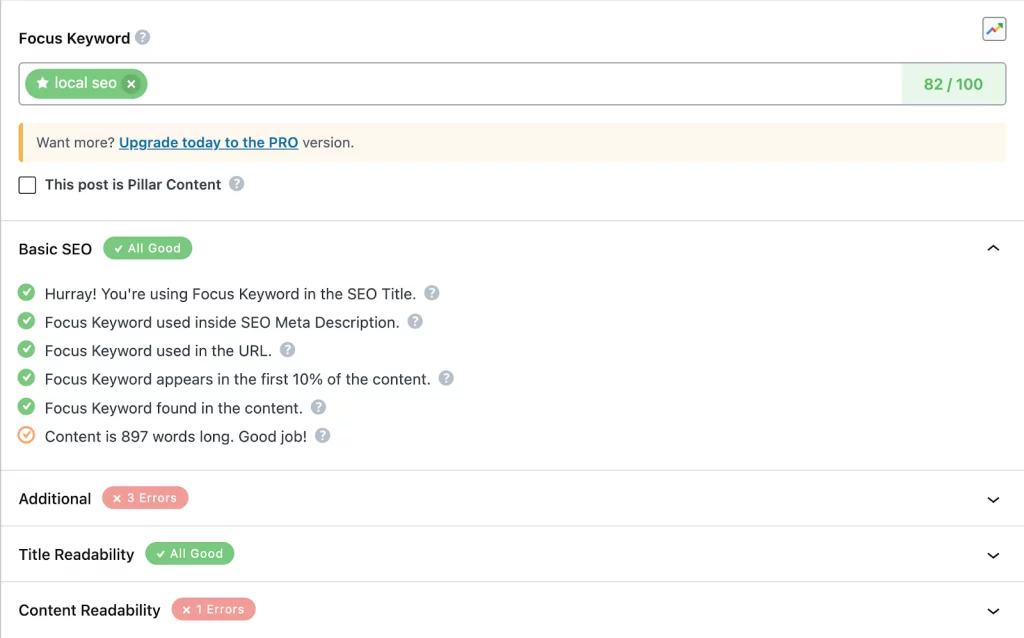
You can input your meta tags using SEO tools like the Yoast SEO or Rank Math SEO plugins for WordPress.
If done well, certain meta tags can aid in search engine optimization by signaling to SERPs the keywords your page should rank for, helping you obtain higher domain authority than your competitors over time. Meta tags also significantly improve website accessibility for individuals who use screen readers to access the internet. There are many types of meta tags — including meta titles, meta descriptions, nofollow and dofollow tags, canonical links, OG meta tags, the now-obsolete keyword meta tag, and more. This piece focuses on the two that have the greatest impact on your search visibility and click-through performance: meta titles and meta descriptions.
How and Why to Write a Meta Title
Meta titles, also known as title tags, are written in the format <title>Insert title</title>.
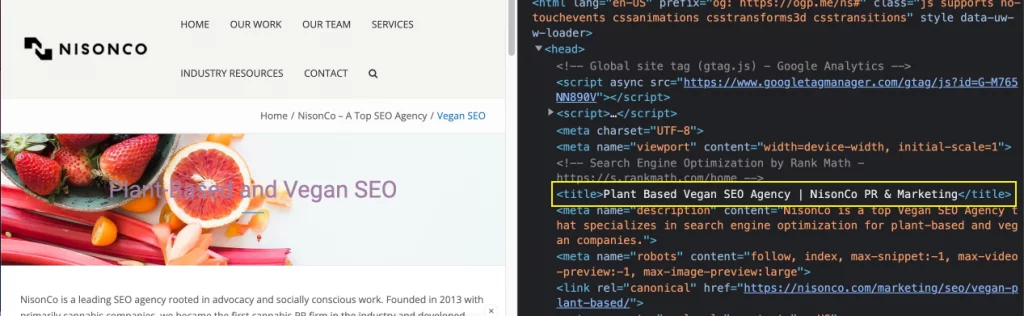
Meta titles, also known as title tags, are written in the format.
These title tags display as the title of your webpage on SERPs, appear as the title on the tab in your browser, and show up as the title when cross-posted on social media (provided you haven’t also set up OG meta tags).
An important consideration when creating meta titles is that Google doesn’t always display the exact title you’ve written. Current research indicates Google rewrites meta titles approximately 33% of the time, choosing instead to display a version it considers more accurate or descriptive for a given query. The most common trigger for a rewrite is a perceived mismatch between your title and your actual page content — Google’s way of protecting its own users from misleading results. Writing accurate, content-aligned titles is therefore your most reliable defense against unwanted rewrites. You can review Google’s official guidance on title links for a deeper understanding of how title generation works.
The Dos of Writing Meta Titles
- Keep it to 50-60 characters — titles that fall in this range are least likely to be truncated in search results
- Give each page a unique meta title that accurately reflects its specific content
- Use your primary keyword naturally toward the beginning of the title
- Write for the searcher first — a title that earns a click is more valuable than a technically perfect one that gets ignored
The Do-Nots of Writing Meta Titles
- Avoid making your title too long — anything beyond 60 characters risks being cut off mid-sentence in search results
- Resist keyword stuffing, which can trigger Google to rewrite your title entirely
- Do not repeat boilerplate language across multiple page titles — duplicate titles dilute your SEO signal
- Never write a title that overpromises or misrepresents what your page actually covers
Meta Title vs H1: Understanding the Difference
One of the most persistent points of confusion when learning how to write meta tags is the difference between a meta title (title tag) and an H1 heading. While the two may sound interchangeable, they serve distinctly different purposes — and treating them as separate strategic assets can meaningfully improve both your search visibility and your on-page user experience.
Your meta title is what appears in Google search results and browser tabs. It does its job before a user ever lands on your page — its sole purpose is to attract clicks from the search results page. Your H1, by contrast, is the main heading that’s visible on your actual webpage. It confirms to the user that they’ve landed in the right place and reinforces content relevance to search engines after the click has already happened.
These two elements do not need to be identical — and in many cases, they shouldn’t be. Your meta title should be shorter, keyword-front-loaded, and click-optimized (50-60 characters). Your H1 can be longer, more descriptive, and written with the reader already on your page in mind. Both should be unique to the page and accurately reflect its content, but they’re doing different jobs at different stages of the user journey. Keeping this distinction clear is a foundational part of strong on-page SEO.
How and Why to Write a Meta Description
Meta descriptions are also displayed in the <head> portion of an HTML document. The syntax for hardcoding them is <meta name=”description” content=”Your description goes here.”/>. These meta descriptions can be used to generate snippets — the short blurbs about your web page that appear beneath the title on a SERP.
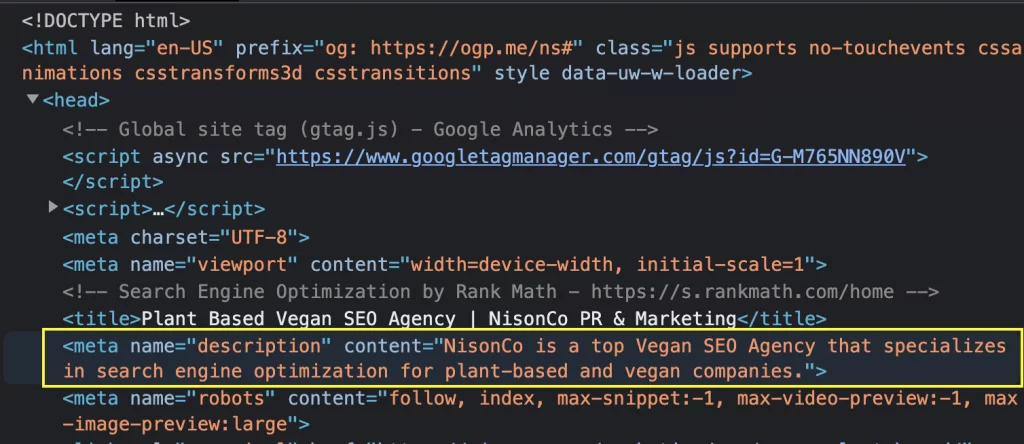
Meta descriptions can be used to generate snippets, which are the short blurbs about your web page that appear under the title on a SERP.
Do Meta Descriptions Affect Your Rankings?
Google has stated that meta descriptions do not directly contribute as a ranking factor. However, it would be a mistake to treat them as unimportant. Meta descriptions are your single best opportunity on the SERP to directly influence whether someone clicks your link. Research suggests that well-crafted meta titles and descriptions working together can boost click-through rates by 10% to 30%, depending on how well they match searcher intent. More clicks signal to Google that your page genuinely satisfies user needs — which indirectly supports ranking authority over time.
It’s also worth knowing that research on top-ranking web pages shows Google rewrites meta descriptions 60-70% of the time — particularly when it identifies a passage from your page that more precisely answers a specific query. Even so, writing a strong meta description gives Google a high-quality starting point, increases the likelihood your preferred description appears for relevant queries, and ensures you’re putting your best foot forward every time someone encounters your brand in search results.
The Dos of Writing Meta Descriptions
- Keep it to 155 characters or less to avoid truncation in search results
- Use relevant keywords naturally toward the beginning of the description
- Keep it specific and relevant to that exact webpage — not a generic site overview
- Vary your long-tail keywords to capture different search intents across your pages
- Include a clear, compelling call to action that gives the user a reason to click
The Do-Nots of Writing Meta Descriptions
- Avoid spamming the description with keywords — it reads poorly and Google will likely rewrite it
- Do not write for robots and algorithms; write for human users who are deciding whether to visit your page
- Resist overusing irrelevant emojis or special characters that distract from your message
- Never use the same description across multiple pages — each page deserves a unique, tailored description
How to Write Meta Tags for WordPress
If your website runs on WordPress, you don’t need to manually edit HTML to manage your meta tags. Plugins like Yoast SEO and Rank Math provide dedicated fields for your meta title and meta description directly within the page or post editor. Both tools offer real-time previews of how your snippet will appear in Google search results, along with character count indicators so you stay within optimal length guidelines. These plugins have become the standard approach for managing meta tags at scale — particularly for sites publishing content regularly. For broader guidance on making your content work harder in search, see our post on how to optimize blog posts and web pages for SEO.
Creating Snippets through Rich Results
Another way to encourage Google Search to display your webpage and snippets in your preferred manner is by utilizing structured data to create rich results. Structured data gives more explicit indicators of the type of content on your webpage and how it should be displayed. Common examples include Events, How-tos, Local Businesses, and Review Snippets.

Using structured data could promote your webpage to be highlighted as a search result feature, such as a Featured Snippet or Knowledge Panel Entry.
Using structured data could also promote your webpage to be highlighted as a search result feature, such as a Featured Snippet or Knowledge Panel Entry. This is not guaranteed — Google considers many factors before elevating a result to these prominent positions — but structured data gives your content the best possible chance of qualifying.
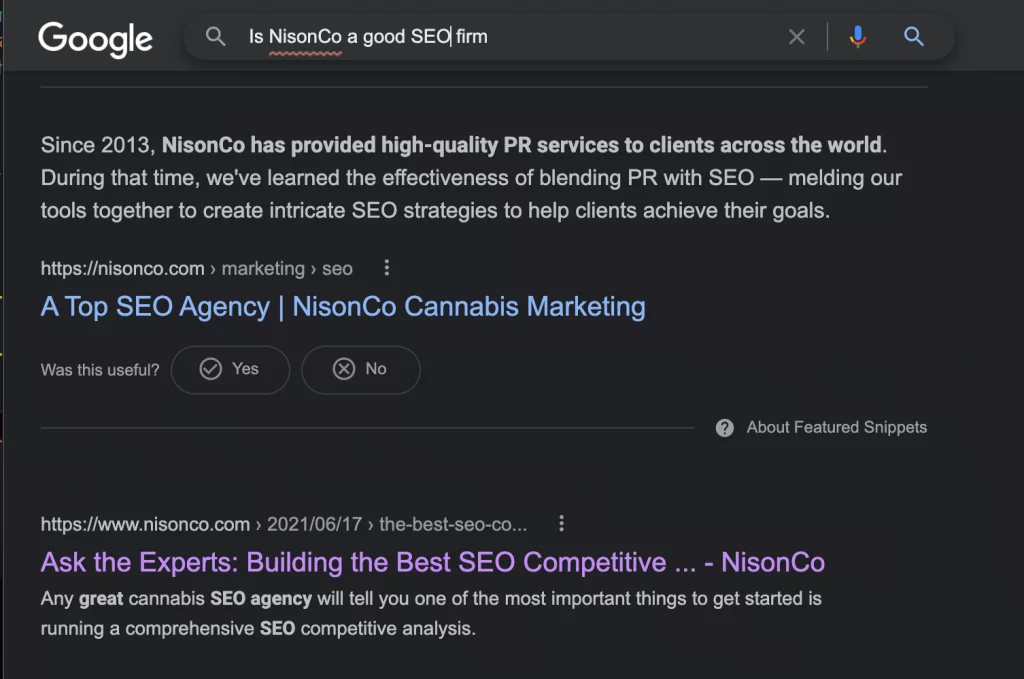
Proper rich results can result in featured snippets.
One way to implement rich results is through JSON-LD, or JSON for Linking Data, a specific type of structured data format. Structured data assigns a “type” to each webpage and can define the scope of the content, along with various properties and embedded items.
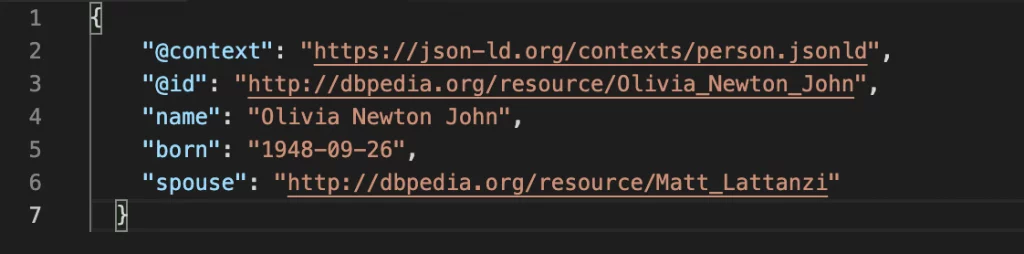
One way to implement rich results is through JSON-LD, or JSON for Linking Data, a specific type of structured data format.
For more information on structured data markup, visit schema.org or review Google’s official structured data documentation for implementation guidelines and supported content types.
Building domain authority takes time and depends on thousands of criteria. Learning how to write meta tags well, crafting compelling descriptions, and implementing structured data are all foundational investments that SEO professionals — including our team — consistently identify as worth prioritizing as you work to drive sustained organic traffic to your website.
Are you seeking help from our experienced psychedelics, cannabis, CBD and crypto/blockchain PR, SEO and marketing team? Let us know if you need help researching trends and topics, crafting communications, or securing news spots by contacting NisonCo here.